
Introduction
Search “IG IPTV” and you’ll find dozens of websites, all confidently describing it as the premium IPTV solution — often with wildly different channel counts, pricing, and claims from one site to the next. That inconsistency is actually the first important thing to understand about IG IPTV, and we’ll explain exactly why it matters before you consider subscribing to anything.
This article takes a neutral, fact-based look at IG IPTV: what the term actually refers to, how IPTV technology works in general, what features are commonly advertised, which devices are typically supported, and — just as importantly — what we could not independently verify. We’ll also cover pricing transparency, security and privacy considerations, the legal landscape around IPTV services, and legitimate streaming alternatives worth comparing against.
Our aim isn’t to promote or discourage IG IPTV specifically. It’s to give you the same kind of evidence-based due diligence you’d want before subscribing to any service that handles your payment information and streams content to your home devices.
Key takeaway: “IG IPTV” isn’t a single, verifiable company in the way Netflix or Hulu is. It’s used both as a generic term for IPTV services marketed through Instagram and as a name adopted by several separate, unrelated websites — each making its own, often inconsistent, claims.
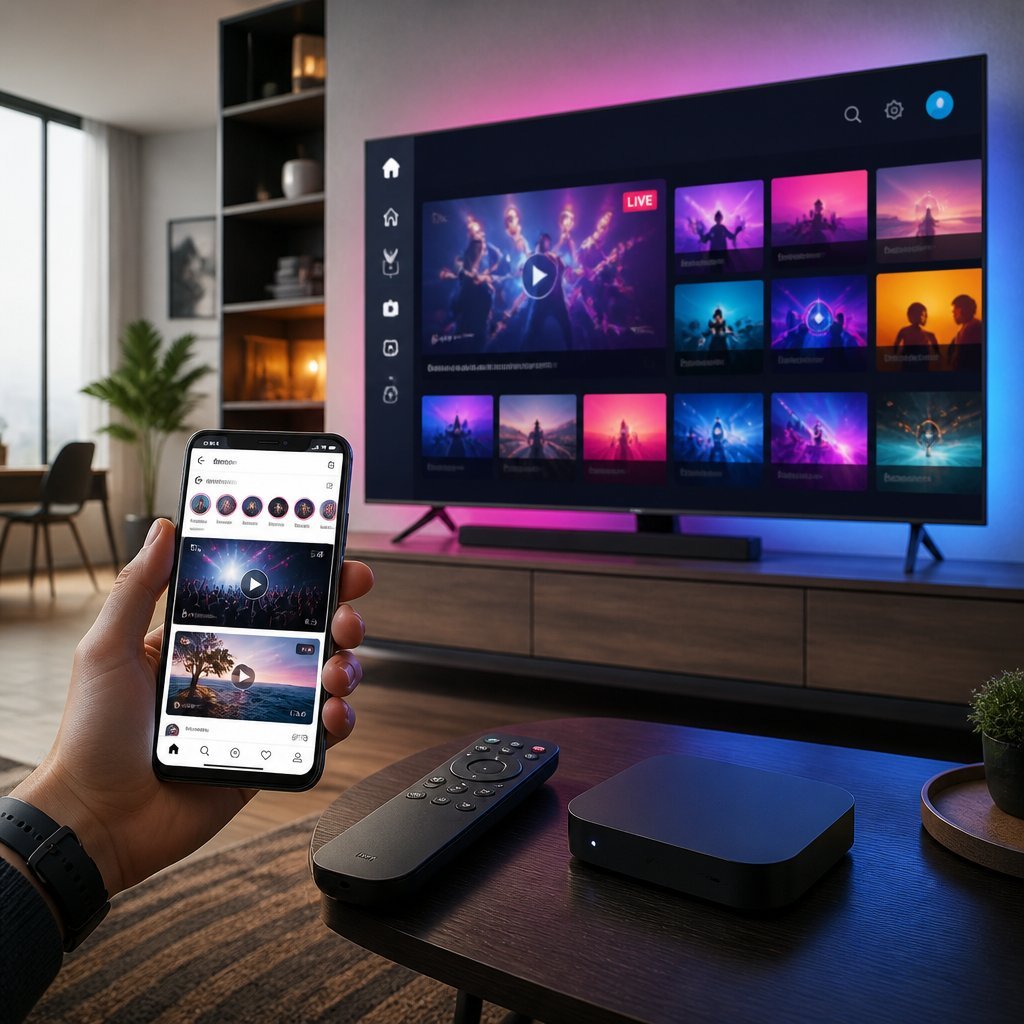
What Is IG IPTV?
Here’s where clarity matters most. Based on our research, “IG IPTV” refers to two overlapping but distinct things:
- A colloquial industry term. “IG” is shorthand for Instagram, and “IG IPTV” is commonly used to describe the broad category of IPTV subscription services that are advertised and sold through Instagram accounts and direct messages, rather than through app stores or conventional advertising channels.
- A brand name used by multiple, separate websites. Several unrelated websites use “IG IPTV” (or close variations like “igiptv.net,” “igiptv.co,” and “ig-iptv.store”) as a product name, each presenting its own pricing, channel counts, and feature claims.
This second point is worth sitting with. When we compared marketing claims across different sites all using the “IG IPTV” name, we found meaningfully different numbers for supposedly the same service — one site advertised over 55,000 live channels and 90,000 on-demand titles, another cited 60,000+ channels and 20,000+ movies and shows, and yet another listed 44,000 channels and 190,000 movies and series. That kind of variance across sites using an identical brand name is a strong signal that these are largely templated marketing pages — possibly produced by resellers or affiliates using similar wording — rather than a single, consistent, independently auditable company.
Important disclaimer: We could not identify one authoritative, verified “IG IPTV” company with a single official website, registered business identity, or consistent published specifications. Where this article describes features, pricing, or performance, it reflects marketing claims found across multiple similarly named sites, not independently confirmed facts about one specific business.
Purpose and Intended Audience
Regardless of which specific site or provider a person encounters, IPTV services marketed under names like IG IPTV generally target the same audience: cord-cutters looking for a lower-cost alternative to cable, sports fans wanting access to international channels, and viewers interested in a large combined library of live TV and on-demand content in one subscription.
How IPTV Technology Works
To evaluate any IPTV service fairly, it helps to understand the underlying technology — which is well-documented and doesn’t depend on any specific provider’s marketing claims.
IPTV, or Internet Protocol Television, delivers television content using standard internet protocols rather than traditional cable, satellite, or over-the-air broadcast signals. In practical terms:
- Video content is compressed and broken into data packets.
- Those packets are transmitted over a broadband internet connection to a compatible device or app.
- The receiving device or player reconstructs the video stream in real time (for live channels) or on demand (for VOD content).
- Adaptive bitrate streaming can adjust video quality based on the viewer’s available bandwidth, which is standard across most modern streaming and IPTV technology.
This delivery method itself is neutral technology — it’s used by fully licensed telecom providers, legitimate streaming platforms, and unauthorized resellers alike. The technology doesn’t tell you anything about whether a specific provider has the rights to distribute the content it offers; that depends entirely on the provider’s own licensing agreements, which are rarely visible to end users.
Most IPTV setups, including those marketed as IG IPTV, rely on one of two common delivery formats:
- M3U playlists, which are simple text files listing channel stream URLs, loaded into a compatible player app.
- Xtream Codes API, a more structured system using a username, password, and server URL to authenticate and load a channel/VOD catalog inside a player app.
Available Features (Only Verified, Commonly Documented Claims)
Because “IG IPTV” spans multiple separate sites rather than one company, we’re listing features that are consistently advertised across the category, while being explicit that we could not independently confirm real-world performance for any specific provider.
Content Library
- Marketing pages consistently describe large channel counts (ranging broadly from roughly 40,000 to 60,000+ depending on the specific site) and substantial on-demand libraries of movies and series.
- Sports, news, entertainment, and international channels are commonly listed as core content categories.
Streaming Quality Claims
- HD, Full HD, 4K, and in some cases 8K playback are commonly advertised.
- Several sites claim high server uptime figures (for example, “99% stability”), though we found no independent, third-party performance audits to confirm these figures for any specific provider.
Advanced Feature Claims
- Some pages mention features like live TV recording, time-shifting (rewinding or pausing live broadcasts), catch-up TV, and multi-device or multi-screen support.
- These features are common in mature IPTV player apps generally, but their availability depends on which specific player app and provider combination is used — not on the “IG IPTV” name itself.
Security Claims
- Several sites state that they use encryption to protect login credentials and payment details.
- We could not independently verify these security claims through any third-party audit, so they should be treated as marketing statements rather than confirmed facts.
Supported Devices
Across the various sites using the “IG IPTV” name, device compatibility claims are fairly consistent with the broader IPTV category:
- Smart TVs from major manufacturers
- Android smartphones and tablets
- iOS (iPhone and iPad)
- Windows and Mac computers
- Amazon Fire TV / Firestick
- Roku (mentioned on at least one site, though Roku’s own platform policies around sideloaded IPTV apps are stricter than Android-based devices)
- Apple TV
- Web browsers, in some cases
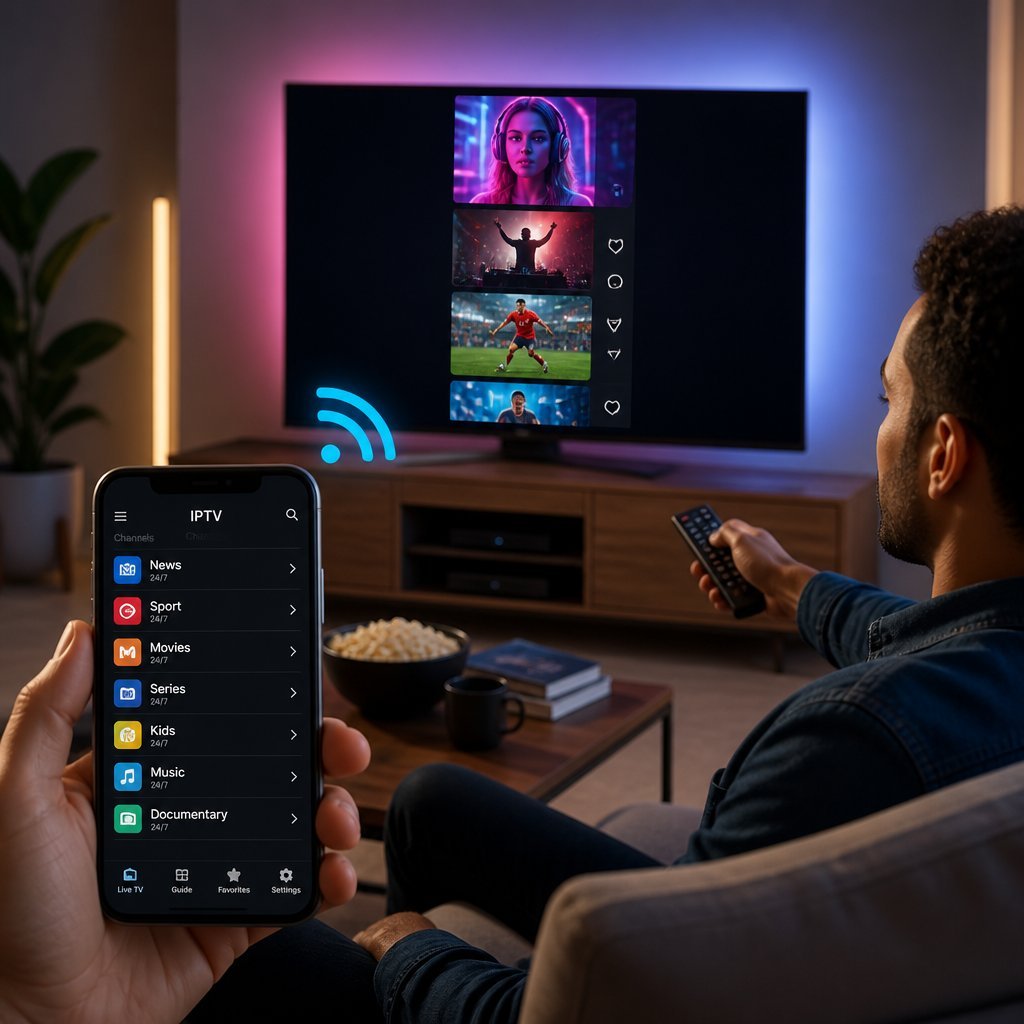
As with most IPTV services in this category, playback commonly happens through a dedicated app (sometimes described simply as “the IG IPTV app”) or through third-party IPTV player apps using M3U or Xtream Codes credentials. We were not able to independently confirm the existence of a single, officially verified app listed under a consistent developer name in the Google Play Store or Apple App Store for one unified “IG IPTV” brand — which reinforces the earlier point that this name is used by multiple, separate operations rather than one company with a single verified app.
User Interface and Experience
Because “IG IPTV” doesn’t refer to one consistent product, the actual interface a subscriber sees depends entirely on which specific provider and app they end up using. That said, a few general, well-documented patterns apply to IPTV services of this type:
- Navigation typically relies on an electronic program guide (EPG) for live channels and a categorized menu (movies, series, sports, etc.) for on-demand content — a layout familiar to anyone who has used a traditional cable guide.
- Setup friction tends to be higher than mainstream streaming apps, since many IPTV player apps require manually entering a playlist URL or Xtream Codes credentials rather than simply logging in with an email and password.
- Performance consistency is difficult to generalize, since it depends on the specific provider’s server infrastructure, the user’s internet connection, and which player app is used.
We did not find independent, structured user-experience testing (from established, neutral technology publications) specifically covering any single “IG IPTV” provider. Most available commentary comes from the providers’ own marketing pages, which naturally describe the experience in favorable terms.
Pricing and Subscription Information
Publicly available pricing claims vary across the different sites using the “IG IPTV” name, which is consistent with the broader pattern of inconsistency already discussed. Some general patterns that appeared across multiple sites:
- Multiple plan durations are commonly offered, such as 1-month, 3-month, 6-month, and 12-month subscriptions.
- Trial periods are sometimes mentioned, including short trials (for example, a single day) to test the service before committing.
- Money-back or satisfaction guarantees are referenced on some sites (commonly a 7-day window), though refund terms and enforcement were not independently verifiable.
- Discount promotions, including offers tied to contacting a seller directly via WhatsApp, appeared on at least one site — a distribution and sales pattern more typical of informal resellers than an established, transparent subscription business.
Because pricing, refund policies, and business terms differ across the various websites using the “IG IPTV” name, we can’t provide one confirmed, universal price. If you’re evaluating a specific IG IPTV provider, treat the following as due-diligence questions rather than assumptions:
- Does the site publish clear, fixed pricing without requiring you to message a third party first?
- Is there a documented refund or cancellation policy?
- Does the provider disclose a registered business name, contact address, or customer support channel beyond a messaging app?
Installation and Setup Overview
While specifics vary by provider, the general setup pattern described across IG IPTV-related sites follows a familiar IPTV structure:
- Choose a plan on the provider’s website (or, in some cases, initiate contact via a messaging app like WhatsApp).
- Receive login credentials — typically an Xtream Codes username/password or an M3U playlist link — usually by email.
- Install a compatible player app. This might be a dedicated app referenced by the provider, or a widely used third-party IPTV player such as those found on Android devices, Fire TV, or Smart TVs.
- Enter your credentials or playlist URL into the player app.
- Load the channel and VOD catalog and begin streaming.
On devices with stricter app-store policies (such as Fire TV or Roku), some providers’ setup instructions may involve sideloading an app from outside the official app store. This is a meaningful step to be aware of, since it bypasses the security review process that official app stores apply to listed apps.
Advantages
Based on commonly advertised features across the category (not independently confirmed performance):
- Large advertised content libraries, spanning live channels, movies, and series in one package.
- Broad device compatibility, at least in terms of marketing claims, across Smart TVs, mobile devices, computers, and streaming boxes.
- Flexible subscription lengths, with multiple plan durations commonly offered.
- International channel variety, appealing to viewers interested in content from multiple countries.
Limitations
- No single, verifiable company. “IG IPTV” spans multiple, seemingly unrelated websites with inconsistent claims, making it difficult to evaluate as one brand.
- Inconsistent marketing figures. Channel and content counts vary significantly between sites using the same name, which undermines confidence in any specific number.
- Limited independent verification. We found no neutral, third-party performance audits, security assessments, or structured reviews confirming uptime, streaming quality, or data-handling practices for any specific IG IPTV provider.
- Sales channels outside standard e-commerce norms. At least one site promotes contacting a seller via WhatsApp for discounts, which is a less transparent and less accountable sales model than a standard, published-pricing checkout process.
- Setup complexity and sideloading risk on certain devices, compared to mainstream streaming apps available directly through official app stores.
- Legal and licensing uncertainty, discussed in detail below.
Security and Privacy Considerations
Some sites using the IG IPTV name claim to use encryption and robust security measures to protect user data and payment details. We want to be precise about what that does and doesn’t tell you:
- A security claim on a marketing page is not the same as an independent security audit. We found no third-party verification of these claims for any specific IG IPTV provider.
- Payment method matters. Providers that push buyers toward less traceable or less reversible payment methods (for example, direct messaging apps and manual transfers) generally offer fewer consumer protections than standard, card-based checkout systems with clear billing records.
- Sideloaded apps carry more risk than app-store apps. Apps installed outside Google Play or the Apple App Store don’t benefit from the same automated security screening, which increases the importance of only installing player apps from sources you trust.
- Credential handling. Since many IPTV setups involve entering login credentials or playlist URLs into third-party player apps, it’s worth using a unique password for any such account and avoiding reuse of passwords from more sensitive accounts like email or banking.
We are not asserting that any specific IG IPTV provider mishandles user data — we simply have no independent basis to confirm or deny that, and neither, as far as we can tell, does most of the content published about IG IPTV online.
Legal Considerations for IPTV Services
The legal status of any IPTV service depends primarily on one question: does the provider hold proper licensing rights to distribute the specific channels and content in its catalog, in the regions where it’s being sold? This is genuinely difficult for an outside reviewer — or an individual consumer — to verify, because licensing agreements are private business arrangements.
A few points that generally apply to IPTV services marketed through informal channels like Instagram:
- Instagram promotion says nothing about legitimacy. A working Instagram page, professional-looking graphics, or an active DM-based sales process doesn’t confirm that a provider has broadcast rights to the content it’s selling.
- Unauthorized redistribution of copyrighted live channels is a recognized enforcement area. Industry groups and regulators in multiple countries have taken action against unlicensed IPTV resellers, and services can be shut down abruptly, sometimes with no recourse for subscribers who’ve already paid.
- Consumer risk isn’t limited to losing access. Beyond service interruptions, using unauthorized streaming services can, depending on jurisdiction, carry legal exposure for the end user — though the specific risk varies significantly by country and is not uniform globally.
- A polished website or active social media presence is not proof of proper licensing. This is true of IPTV services generally, and it applies with particular force to services distributed informally through Instagram, where formal business verification is often minimal.
We are not making a determination about the legal status of any specific IG IPTV provider — we could not verify licensing arrangements for any of them. The responsible approach is to prioritize officially licensed platforms with transparent, publicly documented content rights, and to independently research the legal status of any IPTV provider in your own country before subscribing.
Legitimate Streaming Alternatives
If your goal is simply reliable access to live TV and on-demand content, licensed streaming platforms offer a more transparent, independently verifiable alternative. Here’s how the general category compares:
| Factor | Licensed Streaming Platforms | IPTV Services Marketed as “IG IPTV” |
|---|---|---|
| Official app store presence | Yes, on Google Play and Apple App Store | Inconsistent; often requires third-party player apps |
| Published, fixed pricing | Yes, typically | Varies significantly by site; some require direct contact for pricing |
| Content licensing transparency | Generally documented and traceable | Not independently verifiable |
| Independent reviews and audits | Widely available from established outlets | Very limited or nonexistent |
| Refund/consumer protection | Standard, platform-enforced policies | Inconsistent; varies by seller |
Platforms worth comparing include:
- Netflix — Licensed on-demand movies, series, and originals with a long-established, independently reviewed track record.
- Hulu — Licensed TV and film content, with a live TV add-on tier for broadcast and cable channels.
- YouTube TV — A licensed live TV streaming service covering major broadcast and cable networks.
- Amazon Prime Video — Licensed content bundled with Amazon Prime, plus optional add-on channels.
- Disney+ — Licensed content from major entertainment studios and franchises.
- Sling TV — A licensed, channel-bundle-based live TV streaming service.
These platforms don’t necessarily offer the same raw channel counts sometimes advertised by IPTV resellers, but they offer something IG IPTV-related sites currently don’t: independently verifiable licensing, consistent published pricing, and official app store availability.
Frequently Asked Questions
1. What is IG IPTV? “IG IPTV” is a term used both to describe IPTV (Internet Protocol Television) services marketed through Instagram and as a brand name adopted by several separate, unrelated websites, each with its own claims about channels, pricing, and features.
2. Is IG IPTV one company? Based on our research, no. We found multiple different websites using the “IG IPTV” name with inconsistent channel counts, content library sizes, and pricing, which suggests it functions more as a generic or reused marketing term than a single, verifiable company.
3. Does IG IPTV have an official app? Some sites reference “the IG IPTV app,” but we could not confirm a single, consistently verified app listed under one developer name in the Google Play Store or Apple App Store. Setup commonly relies on third-party IPTV player apps instead.
4. How much does IG IPTV cost? Pricing claims vary across the different sites using the IG IPTV name, and some require contacting a seller directly for pricing or discounts rather than publishing fixed rates. We recommend treating any specific price you encounter as belonging to that particular site, not a universal IG IPTV price.
5. Is IG IPTV safe to use? We found no independent, third-party security audits confirming data-handling practices for any specific IG IPTV provider. General best practices — unique passwords, caution around sideloaded apps, and skepticism toward informal payment requests — apply.
6. Is IG IPTV legal? Legality depends on whether a specific provider holds proper licensing rights to the content it distributes, which we could not verify for any site using the IG IPTV name. Being promoted through Instagram doesn’t confirm legitimacy or licensing.
7. What devices does IG IPTV support? Commonly advertised device compatibility includes Smart TVs, Android and iOS devices, Windows and Mac computers, Fire TV, Apple TV, and in some cases Roku — though actual playback is often handled through third-party IPTV player apps.
8. What is the difference between IPTV and a licensed streaming service? IPTV is a content-delivery technology used by both licensed and unlicensed providers. Licensed streaming services (like Netflix or Hulu) publish clear content agreements, operate official apps, and are independently reviewable; many IPTV resellers, including those marketed as IG IPTV, do not offer the same level of transparency.
9. Are there refunds available for IG IPTV? Some sites reference short refund or satisfaction windows (for example, seven days), but refund enforcement and consumer protection appear to vary by individual seller and were not independently verifiable across the category.
10. What are good alternatives to IG IPTV? Licensed platforms such as Netflix, Hulu, YouTube TV, Amazon Prime Video, Disney+, and Sling TV offer official apps, transparent pricing, and independently verifiable content licensing.
Final Verdict
IG IPTV isn’t a single product you can evaluate the way you’d evaluate an established streaming brand — it’s a name and a category that spans multiple, seemingly unrelated websites, each advertising its own channel counts, pricing, and features, often with meaningful inconsistencies between them. That alone is a reason for extra caution, independent of any specific claim about quality or safety.
What we can say with confidence:
- IPTV, as a technology, is well-documented and legitimate; it’s the specific provider’s licensing and business practices that determine whether a given service is trustworthy — not the technology itself.
- Multiple sites using the “IG IPTV” name make inconsistent claims about content library size, which raises reasonable questions about the reliability of any single figure you might encounter.
- We found no independent, third-party audits confirming performance, security, or content-licensing claims for any specific IG IPTV provider.
- Legal risk in the IPTV reseller space varies by provider and jurisdiction, and cannot be assessed without knowing a specific provider’s actual licensing arrangements.
If you’re specifically drawn to the IG IPTV category because of its advertised content volume or pricing, treat any individual “IG IPTV” website as its own separate entity requiring its own due diligence — don’t assume that reviews or experiences with one site apply to another using the same name. And if your priority is a transparent, independently verifiable, and lower-risk streaming experience, officially licensed platforms remain the more straightforward choice.
Whatever you decide, verify current pricing, device compatibility, and licensing details directly with the specific provider you’re considering, and weigh that against independently reviewed, licensed alternatives before subscribing or sharing any payment information.